Tennisin60 Editorial
Prepared with AI assistance.
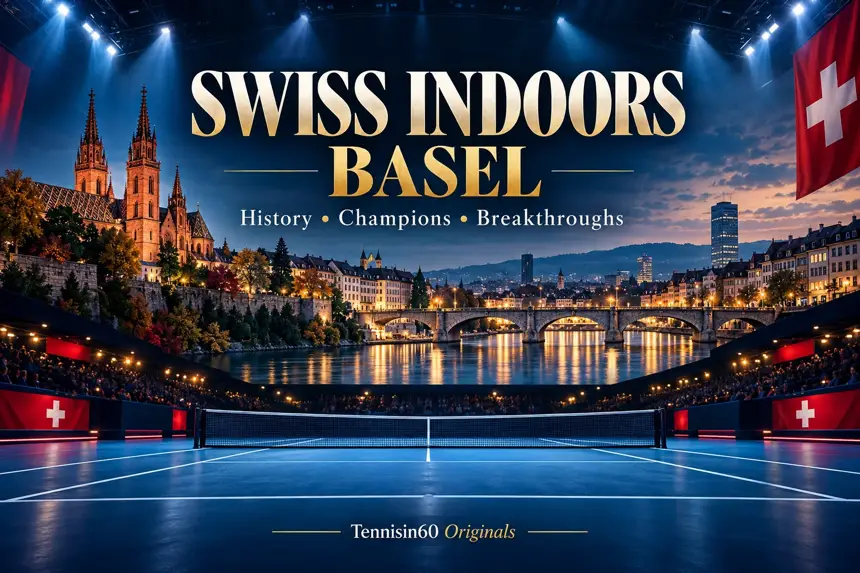
Where Basel’s indoor tournament is played, how it grew, the champions who shaped it and why Federer’s journey from ball boy to ten-time winner remains its defining story.
Swiss Indoors Basel is inseparable from Roger Federer’s hometown legacy, but its story does not end with his ten titles. Félix Auger-Aliassime, Giovanni Mpetshi Perricard and João Fonseca have supplied distinctive chapters in the tournament’s more recent history.
The 2026 main draw runs October 26–November 1, with qualifying on the preceding weekend. Updated October 29, 2026: the current tournament is still in progress, so this history lists champions through 2025. Historical photographs do not confirm participation this year.
Follow the [Swiss Indoors Basel drawsheet](/schedule/men/swiss-indoors-basel-2026/mens-singles) on Tennisin60 for the current bracket and results.
Swiss Indoors Basel at a glance
| Location | Venue | 2026 main draw | Category and surface |
|---|---|---|---|
| Basel, Switzerland | St. Jakobshalle | October 26–November 1 | ATP 500; indoor hard court |
The singles champion earns 500 ranking points. The late-season timing can make this an important week for ATP Finals qualification and year-end rankings, as well as an opportunity to finish the season with a significant title.
Where is the Swiss Indoors played?
The tournament takes place at St. Jakobshalle Basel, St. Jakobs-Strasse 390, 4052 Basel, Switzerland. This is the arena address published by the organiser. The Swiss Indoors company office is in Allschwil, a different location: use the arena address when planning your visit. [9]
Indoor tennis gives the week a distinct atmosphere. Spectators watch under a roof, with the sound of the serve and the crowd concentrated around the court. The absence of wind removes one outdoor variable, but it does not make every indoor court equally fast. Surface preparation, balls and playing conditions still matter.
Parking at St. Jakobshalle is limited. The organiser publishes directions and park-and-ride arrangements, including weekday shuttle provision. Check the current visitor information before leaving rather than assuming you can park beside the arena. Confirm your ticket session and the daily order of play separately: an admission ticket does not guarantee a particular player’s appearance. [10]
Swiss Indoors Basel: from 1970 to a Federer landmark
The Swiss Indoors traces its beginnings to 1970 and founder Roger Brennwald. Its development from a smaller event into an international tournament is documented in the organiser’s historical timeline. Today the competition is played at St. Jakobshalle, an indoor arena in Basel. [1, 2]
No player is more closely associated with its modern identity than Federer. He served as a ball boy at the tournament before becoming its record ten-time singles champion. His winning years were 2006, 2007, 2008, 2010, 2011, 2014, 2015, 2017, 2018 and 2019. The tournament’s champions list also features figures such as Björn Borg, Ivan Lendl, John McEnroe and Pete Sampras. [3, 4]
Federer’s story gives Basel an unusually personal sporting identity: a local child working around the court eventually became the player most associated with lifting its trophy. Yet the tournament’s post-Federer history matters too. Its recent champions demonstrate that the event continues to create new stories rather than simply commemorating an earlier era.
How a small event became an ATP 500
The tournament began in 1970 in an air-supported hall, with a wristwatch for the winner. It moved to the Fiechtenhalle in Reinach in 1974. St. Jakobshalle entered the story in 1975, although the event returned to Reinach in 1976. This was a gradual evolution, rather than a tournament born fully formed in its present arena. [2]
Basel joined the ATP 500 category in 2009. The renovated St. Jakobshalle was inaugurated during the 2018 tournament. Those milestones help explain how a local competition developed the facilities and status to remain a significant autumn stop. [2]
Roger Federer: from ball boy to the hometown champion
Federer was born in Basel, and the ATP describes the Swiss Indoors as his hometown tournament. He served as a ball boy in 1993 and 1994 before becoming its record champion. Basel is therefore a verified part of his upbringing and tennis identity. That connection should not be confused with a verified statement about his current home address or present-day residence. [4, 11]
His ten winning years were 2006, 2007, 2008, 2010, 2011, 2014, 2015, 2017, 2018 and 2019. The sequence was not uninterrupted: Djokovic won the 2009 final, while del Potro defeated Federer in both the 2012 and 2013 finals. Those defeats are part of the story, showing how strongly opponents could challenge him even in the arena most closely associated with his name. [3, 12]
The 2015 final produced a particularly memorable chapter: Federer beat Rafael Nadal 6–3, 5–7, 6–3. His last Basel final, in 2019, ended with a 6–2, 6–2 victory over Alex de Minaur. The tenth Basel trophy became the 103rd and final tour-level title of his career. [12, 13]
His relationship with the ball kids supplied a warmer tradition alongside the records. The ATP recounts how Federer awarded medals and ordered pizza for them. It was an unusually direct link between the child who once worked around the court and the champion celebrating on it. He finished his Basel career with 75 wins and nine losses. [13]
Basel: recent singles champions
| Year | Singles champion |
|---|---|
| 2025 | João Fonseca |
| 2024 | Giovanni Mpetshi Perricard |
| 2023 | Félix Auger-Aliassime |
| 2022 | Félix Auger-Aliassime |
| 2021 | Not held |
| 2020 | Not held |
| 2019 | Roger Federer |
| 2018 | Roger Federer |
| 2017 | Roger Federer |
| 2016 | Marin Čilić |
| 2015 | Roger Federer |
The table covers 2015–2025 and explicitly marks the two years without an edition. It is a recent-champions selection, rather than a claim to reproduce every final since the event began. [2, 3]
The Canadian connection: Auger-Aliassime’s consecutive titles
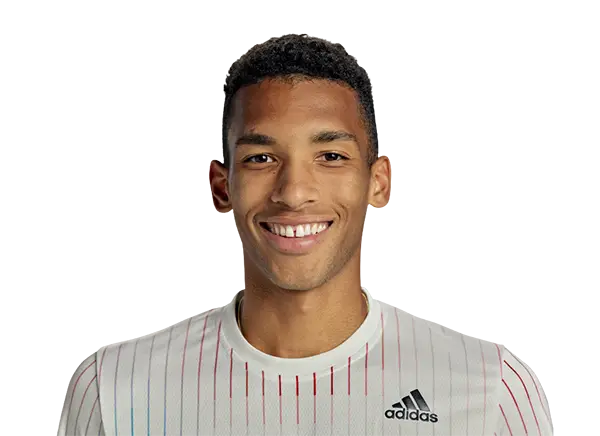
Félix Auger-Aliassime beat Holger Rune 6–3, 7–5 in the 2022 Basel final. It was his third consecutive ATP Tour title, an outstanding sequence rather than his maiden trophy. The following year he returned and defeated Hubert Hurkacz 7–6(3), 7–6(5) to retain the title. [5, 6]
For Canadian followers, those victories make Basel more than a Federer retrospective. The two finals also offered different tests: the first was settled with breaks of serve, while the second required winning both tie-breaks. Retaining a title adds another kind of evidence to a player’s record—returning to a familiar setting and succeeding again when the expectation is already there.
Mpetshi Perricard: from Lyon’s clay to Basel’s indoor stage

Giovanni Mpetshi Perricard won Basel in 2024 by beating Ben Shelton 6–4, 7–6(4). It was his first ATP 500 title and his second ATP Tour title overall. His first had come on clay in Lyon earlier that year. The ATP final report highlighted a remarkable service performance across his Basel week. [7]
The contrast between those settings is part of the breakthrough story. A maiden tour title had established that he could win at that level; an indoor ATP 500 success showed progress in a different environment and at a higher category. Read our [Lyon tournament history](/news/grand-prix-auvergne-rhone-alpes-history-winners-breakthroughs) for the separate Open Parc chapter in which his first title arrived.
João Fonseca: a Brazilian milestone in 2025
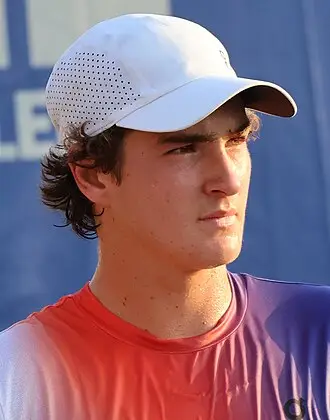
At 19, João Fonseca defeated Alejandro Davidovich Fokina 6–3, 6–4 in the 2025 Basel final. The organiser identifies him as the first Brazilian to win an ATP 500 title since that category was introduced in 2009, and the youngest Basel champion since 1989. Those are specific milestones: they do not mean that no Brazilian had won a significant tournament before him. [8]
Fonseca’s victory illustrates why these events deserve attention alongside the biggest tournaments. A week in an established arena can give a rising player a new place in the sport’s record books. It also gives supporters a concrete result to examine, beyond predictions about potential.
What to watch in the 2026 draw
Start with the actual draw, rather than a list of famous former champions. Entries and availability change, and an old champion’s photograph in this history article does not confirm that he is playing this year. Use the current brackets to identify first-round opponents, seeded sections and possible later meetings.
From a coaching perspective, watch what happens immediately after the serve and return. Can the server gain control with the next shot? Can the returner put enough balls in play to make the opponent earn service holds? These are useful questions for observing a match; they are not a measured claim that the two venues have identical court speeds.
Watch how players respond when a set becomes close. The serve that earns a comfortable hold at 2–2 may face a different test at 5–5 or in a tie-break. These are coaching observations to explore while watching, rather than a claim about measured court speed or an individual player’s current form.
Follow Swiss Indoors Basel on Tennisin60
[Swiss Indoors Basel drawsheet](/schedule/men/swiss-indoors-basel-2026/mens-singles) · [ATP schedule](/schedule/men) · [Scores](/scores#atp) · [Official highlights](/highlights/atp).
Also read our [Erste Bank Open Vienna history](/news/erste-bank-open-vienna-history-champions-breakthroughs) and explore [Professional Tennis Tournament History](/tournament-history).
Sources
- [1] Swiss Indoors — tournament and dates
- [2] Swiss Indoors — tournament history since 1970
- [3] Swiss Indoors — official singles champions
- [4] ATP — Federer biography and Basel ball-boy history
- [5] ATP — Auger-Aliassime wins Basel, 2022
- [6] Tennis Canada — Auger-Aliassime defends Basel, 2023
- [7] ATP — Mpetshi Perricard wins Basel, 2024
- [8] Swiss Indoors — Fonseca wins Basel, 2025
- [9] Swiss Indoors — venue address and organiser contact
- [10] Swiss Indoors — current visitor and parking information
- [11] ATP — Roger Federer player profile and birthplace
- [12] ATP — Basel singles finals since 2009
- [13] ATP — Federer’s Basel pizza parties, final title and 75–9 record
Originally published by Tennisin60. Original article text and sources preserved. Original publication ↗